Kārlis LĀCIS
Jolanta STRIKAITE – soprano
Gints PABĒRZS – saxophone
State Academic Choir “Latvija” – choir
Programme:
Arvo PÄRT – Credo,
Arvo PÄRT – Symphony No. 1,
Kārlis LĀCIS – Symphony “The Way of the Cross”.
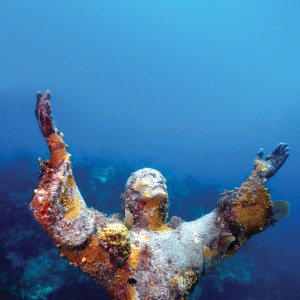
A new symphony in Latvian music is a notable event. Kārlis Lācis has written a symphony for soloists, choirs and orchestra, “The Way of the Cross”, of which he says: “The Way of the Cross is my road of questions. Yours too.”
The work was initiated by Māris Sirmais, artistic director of the choir “Latvija”, who has already worked successfully with Kārlis Lācis on several occasions. In the symphony “The Way of the Cross” the choir “Latvija” and the LNSO will be joined by the brilliant young soprano Jolanta Strikaite and one of Latvia’s finest saxophonists, Gints Pabērzs.
The first half of the concert brings works from Arvo Pärt’s youth: the dodecaphonic Symphony No. 1, which Pärt dedicated to his teacher Heino Eller, and the work for voices and orchestra Credo, in which Pärt uses collage technique, captivating the listener with the sounds of Bach’s best-known prelude and startling them with grand contrasts of dynamics.
Kārlis Lācis (1977) says of his new work “The Way of the Cross”: “These are semiotic reflections on the Way of the Cross, seen through the opposition between an age and a personality. In spiritual hunger a person, like a wolf, gives in to the pack’s thirst for blood and refuses to take up his own Lenten cross. He stifles the pain of the soul by hurting the body – his own and other people’s. Unstoppably. Endlessly.
The Way of the Cross as an illustrative example given by Christ – a metaphor destined to remain within the walls of the church.
Why does Man need a Saviour? Is it in order to shift responsibility from himself onto someone who will, one hopes, come as a Rescuer? How many of those lone wolves, their flesh torn with scars, will stop and hear the voice of the soul? How many people will be changed? Am I close to God, or must He still call me to Him? (The Way of the Cross is my road of questions. Yours too.)”
Arvo Pärt (1935) is a composer whose work we associate with the world-famous bell-like, or tintinnabuli style, in which such hugely popular masterpieces as Tabula rasa, Fratres, Spiegel im Spiegel, Für Alina and others were written. Before tintinnabuli there was an eight-year silence – Pärt composed almost nothing (the exceptions being the Third Symphony and a cantata) and studied medieval and Renaissance music in depth.
In the first period of his work – the 1960s – Arvo Pärt is a decidedly fierce representative of modernism. In his earliest compositions he uses contemporary techniques and very nearly becomes a composer non grata, for a modernist-minded, uppity young man could hardly count on the sympathies of those who supervised Soviet cultural life.
This period saw the creation both of the twelve-tone Symphony No. 1 and of Credo. This emotionally capacious, majestic and powerfully affecting work for piano, choir and orchestra caused a considerable stir with its unmistakable reference to Christian sacred values, which later became the very substance of Pärt’s music – but just imagine what that meant in 1968! The beautiful sounds of Bach’s C major prelude at the opening, then a grandiose crash from choir and orchestra, and after that the noise of chaos embodied in aleatoric sounds – the audience was thrilled, the authorities were enraged. And Pärt’s period of silence began.