

David GERINGAS
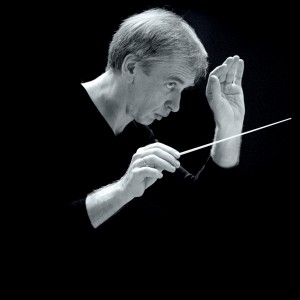
Conductor Gintaras RINKEVIČIUS
Programme:
Robert SCHUMANN – Concerto for cello and orchestra in A minor, Op. 129
Anton BRUCKNER – Symphony No. 7 in E major
Gintaras Rinkevičius’s stormy temperament, broad sweep and firm grip are well known to Latvian audiences. This time the maestro has chosen Anton Bruckner’s Seventh Symphony – sunlit Alpine peaks, the majesty of the organ, a sense of cosmic order and a warm happiness. Alongside Bruckner comes Schumann’s Cello Concerto, marking the long-awaited Latvian visit of the world-famous Lithuanian cellist David Geringas.
“The particular quality of the cello’s sound answers exactly to the beloved dreamer we know as Schumann,” said the distinguished British musicologist Donald Tovey. Specifically for the cello Robert Schumann wrote only three opuses – the “Five Pieces in Folk Style”, the “Five Romances” (which Clara Schumann burned 40 years after her husband’s death) and the Cello Concerto. That is all. As the brilliant present-day cellist Steven Isserlis writes, had a master of the instrument worthy of his gifts been close at hand, Schumann might well have written other works for the cello.
Schumann never heard his own Cello Concerto during his lifetime. There was one cellist, Bockmühl, who declared himself willing to play the work, but he disliked the final movement and even prophesied that a horde of cellists would come to Schumann in his dreams and threaten him with their bows if he did not rewrite the finale. Happily, Schumann was not afraid of cellists in his dreams and changed nothing, so that we now have the chance to enjoy one of the most beautiful concertos ever written for the cello, that closest of all instruments to the human voice.
Anton Bruckner’s Seventh Symphony is one of the rare examples of genuinely happy, sun-filled music in the history of Western music. It also proved to be the work with which Bruckner finally stepped into the circle of fame, and that came rather late – at the age of 61. While he was composing the symphony’s second movement, on 14 February 1883, Bruckner received word that his adored Wagner – the master of all masters – had died the day before. The two had last met a year earlier in Bayreuth, where Bruckner heard “Parsifal”. In the closing minutes of the Seventh’s second movement one hears a brass chorale dedicated to Wagner’s passing. At the same time this whole slow movement is a realm of pure beauty, to be set beside, say, the Nocturne of Borodin’s Second String Quartet, the Mahler Fifth Symphony Adagietto or the Rachmaninoff Second Symphony Adagio. The first and last movements of the Seventh, by contrast, are sunlight glittering on the white snows of the Alps and in the stained glass of Austrian churches. Anton Bruckner – forever unfashionably dressed, innocent of polished manners and hopelessly in love with one or another of his pupils – was able to create music with a gesture worthy of a ruler of the world.
Gintaras Rinkevičius is one of the most outstanding and internationally acclaimed Lithuanian conductors. A professor at the Lithuanian Academy of Music and Theatre, he founded the Lithuanian State Symphony Orchestra in 1988 and is its artistic director and principal conductor. Since 2007 Gintaras Rinkevičius has also been artistic director and principal conductor of the Novosibirsk Academic Symphony Orchestra.
From 1996 to 2003 Rinkevičius was principal conductor of the Latvian National Opera, and from 2007 to 2009 its principal guest conductor. A two-time Latvian Grand Music Awardlaureate (1996, 1999). Officer of the Order of the Three Stars.
David Geringas is a distinguished Lithuanian cellist and conductor, a musician known and warmly welcomed the world over, with a repertoire ranging from the Baroque to the present day. He studied at the Moscow Conservatory with Mstislav Rostropovich and won the gold medal at the Tchaikovsky Competition in 1970.
David Geringas has appeared with the world’s finest orchestras and conductors. His discography runs to some 100 recordings, a number of which have earned high distinction, among them the Grand Prix du Disque for his recording of the Boccherini cello concertos, the annual Diapason d’Or for his recordings of Dutilleux’s music, and the Deutschen Schallplattenkritik prize for a recording of Pfitzner’s chamber music. In 2013 Geringas received the prestigious Echo Klassik award in the category of best chamber music recording of the 20th and 21st centuries.
Several outstanding composers of our time have dedicated cello concertos to David Geringas – Sofia Gubaidulina, Ned Rorem, Erkki-Sven Tüür and Pēteris Vasks.