

Egils UPATNIEKS – oboe
Jānis SEMJONOVS – bassoon
Georgs SARKISJANS – violin
Dace ZĀLĪTE – cello
Conductor Daniel RAISKIN
Programme:
Johannes BRAHMS – Symphony No. 1 in C minor, Op. 68
Joseph HAYDN – Sinfonia concertante in B flat major, Hob. I:105
Pēteris VASKS – Symphonic elegy “Island”
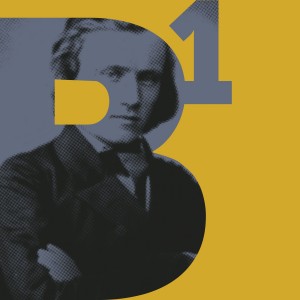
This season the LNSO celebrates Brahms – Andris Poga has placed all four symphonies and the German Requiem in the season’s plans. He will conduct the Third and the Fourth himself, has entrusted the Second to the St Petersburg maestro Nikolai Alexeev, and has given the First to Daniel Raiskin, who will have the honour of launching our Brahms cycle on 16 October.
Alongside Brahms’s First, the concert brings the symphonic elegy “Island” by Pēteris Vasks, who celebrates a major anniversary next year, and Joseph Haydn’s Sinfonia concertante, in which LNSO soloists will shine – the orchestra’s newly appointed concertmaster Georgs Sarkisjans, principal oboe Egils Upatnieks, principal bassoon Jānis Semjonovs and cellist Dace Zālīte.
Johannes Brahms composed four symphonies. The question is – why so few, why only in the second half of his life, and within a mere ten years at that? The long gestation of the First Symphony – 21 years! – most probably has to do with Brahms’s reflections on the genre itself and its place in the music of his day. Surely Beethoven could not have said it all? And yet – to compose a symphony after Beethoven… Never mind that almost 30 years had passed since his death.
There is evidence that while writing the First Symphony Brahms felt as though Beethoven’s ghost were standing behind him – and not to encourage him, but to shake his head critically at every note Brahms committed to paper. At the same time, nothing could irritate Brahms more than conductor Hans von Bülow’s claim that Brahms’s First was in fact Beethoven’s Tenth. Be that as it may, Brahms’s First is a masterpiece, and it will be a pleasure to hear how it is interpreted by Daniel Raiskin – once an outstanding violist and in recent years a conductor of high standing in Europe, artistic director of the Rhenish Philharmonic State Orchestra and the Artur Rubinstein Łódź Philharmonic Orchestra. He has been a guest in Riga several times – as a violist he has played music by Françaix, Kancheli, Martin and Schnittke, and he has conducted Shostakovich’s Symphony No. 15, Myaskovsky’s Symphony No. 21, Berlioz’s “Symphonie fantastique” and more.
Pēteris Vasks composed the symphonic elegy “Island” on a commission from the Magnum Opus Foundation, set up by Silicon Valley (USA) millionaire Katherine Gould. The composer says of the work: “The key to the piece is the image of an island. Each of us is an island in the ocean of the world. I imagine a shimmering mist that clears to reveal land. That is how I see and feel the world. I should add that on my island you will meet my friends – Jean Sibelius and Dmitri Shostakovich – and distant echoes of their music.”
Finally, Joseph Haydn and his Sinfonia concertante – an elegant model of Viennese Classicism, by turns tender and playful, in which the melodic lines of four soloists intertwine in graceful harmony. The work was written during Haydn’s first London visit in 1792, and the story goes that it was prompted in part by the rivalry the newspapers had stirred up between Haydn and Ignaz Pleyel, who had produced a piece for a similar line-up. Listeners will have heard of Haydn’s London manager Johann Peter Salomon, who set the composer’s 12 London symphonies in motion. Well, it was this same Salomon who is said to have played the violin part at the premiere of the Sinfonia concertante , which was received with enormous enthusiasm.
As usual, before the main evening concerts, at 18.00 audiences are invited to the pre-concert talks hosted by Orests Silabriedis in the White Hall of the Great Guild.
Ahead of the 16 October concert, a video commentary has been promised by that expert admirer of Brahms’s music and outstanding storyteller Jānis Torgāns.