

This programme brings two beautiful, large-scale masterpieces of the Romantic era.
Johannes Brahms’s Double Concerto is the master’s last venture into the concerto genre. It was composed in the summer of 1887 in Switzerland by Lake Thun – Brahms always chose summer retreats rich in mountains and lakes.
This concerto is generally regarded as a token of reconciliation between Brahms and Joachim. Despite their very different temperaments, the two were close acquaintances early in their careers and successful partners on the concert platform. The friendship broke down because in 1884 Joachim and his wife, once a promising singer who had given up her career for family life, came to the brink of divorce, and Brahms wrote Joachim’s wife Amalie a sympathetic letter containing some rather sharp remarks about Joachim himself. Amalie later used the letter in court. Relations between Brahms and Joachim naturally cooled. The situation improved only slightly when Brahms presented Joseph with his Double Concerto as a sign that he wished to restore their friendship. And it is truly hard to imagine a better gift than this superb masterpiece.
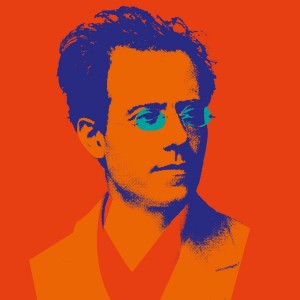
Gustav Mahler’s First Symphony was composed at the time when the master left his post at the Leipzig Opera and accepted an invitation to open new horizons at the Budapest Opera. Mahler was known and highly valued as an opera conductor, while as a composer he was still a fairly marginal figure – and it is worth remembering that when he wrote the First Symphony Mahler was only 27.
Gustav Mahler composed nine completed symphonies, and the first four are closely bound up with the folk-poetry collection “Des Knaben Wunderhorn” (“The Youth’s Magic Horn”). Published at the beginning of the 19th century, these poems spoke powerfully to Mahler, who grew up in a small Moravian town amid a generous store of folk song and everyday music-making. At 24 he wrote the widely known song cycle “Lieder eines fahrenden Gesellen” (“Songs of a Wayfarer”), whose texts have their seeds in the “Wunderhorn”, and two songs from the cycle are woven into the fabric of the First Symphony.
The symphony’s third movement stands out in particular, for its inspiration came from an engraving by a French artist showing forest animals escorting a huntsman to his grave. In Mahler’s hand the picture’s charming grotesquerie turned into a spectral funeral march, and its melodic kernel is Mahler’s variation on the popular canon “Bruder Jakob” (in French “Frère Jacques”, in Latvian “Brāli Jēkab”, and so on).
It makes interesting reading to look at colleagues’ notices after the symphony’s premiere in Vienna. Eduard Hanslick, who until then had been well disposed towards Mahler, admits that from the very first bars the work struck him as “a stranger in music”, and sums up: “One of the two of us is mad, and it is not I.” Theodor Helm reports that this music is “a formless jumble of a crowd”. Robert Hirschfeld holds that Mahler simply does not wish to be taken seriously, and that the symphony’s finale is nothing less than a satire on the arrogance of the mighty geniuses of our time. Reading all this, Mahler merely remarked that the First Symphony would always be his problem child.
Georgs Sarkisjans – LNSO concertmaster
Ēriks Kiršfelds – cello