
Aga MIKOLAJ – soprano
Olesya PETROVA – mezzo-soprano
Giorgio BERRUGI
Riccardo ZANELLATO
State Academic Choir “Latvija” – choir
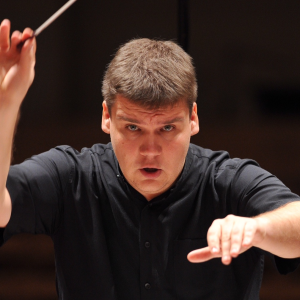
Conductor Andris POGA
Programme:
Giuseppe VERDI – Requiem
Giuseppe Verdi’s legendary and much-loved Requiem is less a mirror of eternal light than an imposing, dramatic work that prompts very earthly reflection and gives the listener unforgettable moments of emotional experience.
It is known that Verdi (like Berlioz, Brahms and Fauré) defined his outlook as that of an agnostic – someone who holds that we can know nothing about the existence or non-existence of God. In a letter to his publisher Ricordi the composer wrote: “I am something of an atheist.” And in a letter to his wife Giuseppina, Verdi said: “Some virtuous people need God. Others, who keep to the very highest moral standards just as faithfully, are happier believing in nothing.”
Here is what Giuseppina herself wrote: “He is a jewel among the most honest of men, capable of the finest and noblest feelings. And yet this ruffian allows himself to be – I will not say quite an atheist, but there is very little of the believer in him, and this obstinacy sometimes makes me want to box his ears. I could talk myself to death about the wonders of the heavens, the earth and the sea, but it is a waste of time. He laughs straight in my face and cuts short my oratorical flights and my divine enthusiasm by saying: you are a funny creature. Unfortunately he says it with complete conviction.”
To answer the question of just whom the agnostic Verdi is asking for eternal rest, we might turn to the German music scholar Benjamin Gunnar Cohrs, who says that Verdi, no champion of the idea of eternal light, in the raging whirlwinds of wrath of hisDies iraereminds us of the excessive power wielded by “dogmatic minds, institutionalised religion and political systems that presume to pass arrogant judgment on Good and Evil. The dilemma is that they must use Evil in order to attain their imagined Good.”
The concert forms part of the Public Diplomacy and Culture Programme of the Latvian Presidency of the Council of the European Union.